Some birthday themes fall flat once the cake is cut. Inflatables are the opposite. A good bounce house or water slide transforms a backyard into a playground and keeps kids moving for hours. Parents get breathing room, kids go home tired and happy, and the photos look like you hired a theme park. I have planned and hosted more inflatable parties than I can count, from chilly spring afternoons with a bouncy house under a tent to midsummer blowouts with a foam machine and a water slide rental. This guide walks you through the decisions that matter, the ones that save you money, and the pitfalls I see families hit when excitement outruns logistics.
Start with the guests, not the gear
Before calling any company, picture who is coming. The ages, energy levels, and mix of siblings will determine everything else. A group of 5 year olds plays differently than a pack of 9 to 11 year olds. Younger kids thrive with a simple bounce house and a few inflatable games like ring toss or giant connect four nearby. Older kids want competition and speed, which is where an inflatable obstacle course or tall waterslide shines.
Headcount matters. A standard bounce house can handle eight small kids at a time, sometimes fewer if you have a wide range of ages. A larger combo unit, the kind with a small slide attached to the bounce area, runs smoother for 10 to 12 kids cycling in and out. Once you hit 15 or more children, add a second attraction so you avoid a single long line and unhappy birthday guests. The hour after cake tends to be the most chaotic. Giving kids two places to burn energy keeps the vibe positive.
I always ask parents about guests with sensory sensitivities or mobility challenges. A quiet corner with lawn games, chalk, or a small ball pit can make the party feel inclusive and gives overwhelmed kids a reset point. Think about shade and seating there too. The goal is not just big fun, but fun for every kid.
Choosing the right inflatable mix
Here is the fork in the road that can swing your budget by hundreds of dollars. You do not need the biggest unit to have the biggest smiles. What you need is a well-matched set based on the season, your space, and your group.
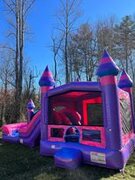
Bounce houses are the workhorse. A classic bounce house or bouncy house takes up modest space, sets up fast, and entertains a broad age range. Rental companies offer standard 13 by 13 foot units and larger 15 by 15 foot options. Themed bounce house designs are worth it if your child is obsessed with a character or sport. Think unicorn castle, dinosaur jungle, pirate ship, or a soccer field graphic. The theme does a lot of decorating for you. That means less time fussing with balloons and more time enjoying the party.
Combo units add a slide and sometimes a basketball hoop inside the bounce area. Hybrids work well when you want more engagement in one footprint. Kids bounce, shoot hoops, and take turns on a shorter slide, which keeps lines moving. They are great in cooler months when a water slide is off the table, or for younger kids who may not be ready for a towering drop.
Water slides are the summer headliner. A water slide rental turns a backyard into a camp vibe. The sweet spot for most suburban yards is 15 to 18 feet tall. Anything taller needs more clearance and a very steady staking plan. If your crowd skews older and you have the space, a 20 to 22 foot waterslide delivers thrills without scaring parents. Ask about landing zones. Pool landings feel splashy and look great in photos. Bumper or splash pad landings use less water and can be safer for mixed ages.
Inflatable obstacle course units are the secret weapon for big groups. These bring crawls, climbs, pop-ups, and a short slide into a long race lane. They eat lines efficiently because two kids can run side by side, and the turnover is fast. I like obstacle courses for kids seven and up, especially if you plan team games or timed runs.
Inflatable games add variety and keep the rhythm of the party balanced. A quarterback toss station, inflatable skee-ball, or a soccer shootout gives kids who are not in the bounce house something to do that still looks special. These are often cheaper add-ons than a second big unit and help manage crowd flow.
Measure the space, then measure again
Inflatables for kids look smaller online than they are in your yard. You need length, width, and height. Add a safety buffer around the unit, usually three to five feet on all sides. Example: a 15 by 15 foot bounce house often needs a 20 by 20 foot clear pad. For water slides, plan for an extra landing zone and room for the blower and hose routing. Do not forget the path from the driveway to the setup spot. A standard gate at 36 inches is fine for most units, but some obstacle courses come in heavy, bulky sections that need wider access or a longer carry. If the installer has to muscle past tight corners or stairs, set expectations ahead of time.
Overhead clearance can make or break a booking. Telephone drops, tree branches, and pergolas are common snags. The rule of thumb I give is this: if you cannot swing a broom handle straight up at the setup spot, it is too tight. For tall slides, ask the company for the exact height plus a safety margin. It is no fun to discover during setup that the pretty oak branch limits your height.
Surface matters. Grass is ideal for staking and softer landings. Turf works if the company brings sandbags and uses protective mats to prevent heat damage. Concrete and asphalt are doable with weighted anchoring, but you will want foam mats at entry and exit points and a clear plan to manage water flow. Dirt can turn to mud fast on a summer slide, so think through placement and bring extra towels.
Power and water: the unglamorous essentials
Most bounce blowers run on a standard 15-amp outlet. A single blower typically draws 7 to 12 amps while running. Water slides and large obstacle courses may use two blowers. Spread the load across separate circuits when possible. The giveaway that you have a shared circuit is when turning on a kitchen appliance trips the breaker for the yard outlet. I like to test outlets the day before by plugging in something like a shop vac and listening for any flicker or breaker click. Extension cords should be heavy gauge, 12 or 14 gauge for longer runs. Ask your rental company if they bring cords and how long they run safely.
For a water slide, you will need a hose long enough to reach the setup point with a steady flow. Most slides use a simple spray line with zip ties or built-in tubing. Water usage over a four-hour party is typically in the range of 150 to 300 gallons, sometimes more with constant flow and a pool landing. To put that in perspective, that is two to five standard bathtub fills. If your area has restrictions or high rates, a bumper landing and conservative spray flow can bring that number down.
Permits, insurance, and safety that actually gets practiced
For backyard parties on private property, you generally do not need a permit. Public parks often require reservations and proof of insurance, and many restrict staking into the ground. If you plan to host at a park, call the parks department and ask specifically about inflatables and generators. Expect to share a certificate of insurance from the rental company and to pay a small event fee.
Insurance is not just a checkbox. Ask the company for a current certificate of insurance with liability coverage and, if possible, name you as additionally insured for the event date. Quality companies produce this within a day. Check reviews with an eye on punctuality, cleanliness, and communication. A brand-new unit is not as important as a company that shows up on time, secures the inflatable properly, and walks you through the safety rules.
Every inflatable should be fully staked or weighted according to manufacturer specs. Four corner stakes on a bounce house is a baseline. Taller units usually need extra tie-down points. I watch for slack straps and loose sandbags. If the wind forecast shows gusts over 15 to 20 mph, plan to close taller slides or ask your provider for their policy. Many rental contracts include wind thresholds. Treat them seriously. No birthday is worth a safety gamble.
Shoes off, no sharp objects, and strict age mixing are the three rules that keep the day smooth. Separate older kids from toddlers inside the bounce house. Enforce a one-at-a-time rule on slides. Put an adult spotter at the entry point during peak play. In my experience, the five minutes you spend going over rules in a kid-friendly way pays off with fewer tears and fewer collisions.
Timeline that keeps the day moving
I like to work backward from cake time, which usually falls at the midpoint. If you plan a three-hour party, aim for cake around 90 minutes in. That gives you time for arrivals and warm-up play, a break for food and singing, then a final run where kids burn off sugar and finish with a big smile.
Ask your inflatable company to deliver at least 60 to 90 minutes before guests arrive. Setup takes 20 to 45 minutes depending on the units and access. Early setup allows the crew to tweak positioning and for you to stage shade, chairs, and snack stations around the footprint. Have towels, sunscreen, and a small bin for shoes near the entry. A simple traffic flow solves half of your crowd control.
Weather deserves a plan B. Summer storms pop up quickly. Tarps and pop-up tents provide shade and light rain protection for bounce units, but you should not run blowers in a heavy downpour or lightning. If you see a questionable forecast, keep your provider in the loop the day before. Good companies offer free rescheduling or credit for weather within a certain window. Sunday backup dates are common.
The themed bounce house as decor and memory maker
Parents often ask whether a themed bounce house is worth the extra cost. If your child lives and breathes dinosaurs, princesses, construction trucks, or space, it can be. A theme pulls the party together and reduces your decorating list. Save your budget for a high-impact backdrop near the inflatable entrance, like a simple garland in coordinating colors and a banner. Kids remember the feeling more than the table setup. A themed entrance in photos does more than centerpieces ever will.
Tie your cake and favors to the inflatable story. For a pirate ship bounce house, we have set up a treasure hunt that ends at the inflatable, with a small chest of gold-foil chocolate coins waiting near the entrance. For a jungle theme, I have used animal-print towels rolled in a basket so kids always know where to grab one after the water slide. The small, practical touches make the day feel intentional.
Budgeting without losing the fun
Prices vary wildly by region and season. A standard bounce house rental for a day might run 120 to 250 dollars in many markets. Combo units land in the 200 to 350 dollar range. Water slide rentals often start around 300 and go to 600 or more for larger units or weekend days. Inflatable obstacle course units are often in the 300 to 700 dollar range depending on length. Delivery distance, setup complexity, and holiday weekends push the numbers up.
If you need to keep the budget tight, pick one flagship inflatable that matches your group and then add low-cost stations. A small inflatable game or a DIY water play area with sprinklers, buckets, and sponges rounds out the day at minimal cost. Two medium attractions usually beat one oversized unit for throughput and variety. Also ask about weekday pricing or all-day rates. Sometimes a Friday evening party saves 15 to 20 percent compared to Saturday noon.
Avoid hidden fees by clarifying delivery windows, cleaning expectations, and overnight policies. If you want the inflatable picked up after dark, say so early. Some companies charge for late-night pickups. Others are happy to leave the unit overnight party rentals at no extra cost, provided it is secure and weather is calm. That can turn your party into a morning-after bounce session just for the birthday kid and siblings.
Food, flow, and the shoe problem
Food at inflatable parties should be easy to grab and hard to drop. A plate of watermelon wedges, cut fruit cups, pretzel rods, and simple sandwiches stand up to wet hands and grass. Avoid crumbly chips that end up inside the bounce house, and skip sauces near entry points. I keep sticky treats for the second half of the party. If you go big on sugary drinks early, kids tire faster and scrapes increase.
Water is the unsung hero. On hot days, place two coolers near the inflatable with a marker tied on a string so kids can label cups. Parents appreciate it, and you cut down on half-finished bottles lying in the yard. For shade, two pop-up tents set at a right angle provide a breezy corner where kids can rest. If you only have one, angle it toward the inflatable exit so kids have a natural landing zone out of the sun.
Shoes pile up. Give them a home. A cheap shoe rack or a line of laundry baskets labeled by age group keeps the entry area clear and reduces lost shoes at pickup time. I have seen parties grind to a halt while ten kids hunt for mismatched sneakers in the grass. Preventable chaos.
Hosting tricks that save you time and stress
Assign roles lightly. One adult keeps an eye on the inflatable entrance. Another handles food replenishment. One more floats to manage music, trash, and quick cleanup. Rotating every 30 minutes keeps everyone fresh. Put a basic first aid kit near the back door with bandages, antiseptic wipes, and an ice pack. You may never need it, but you will be glad you know where it is.
Music changes the energy. A small Bluetooth speaker with a family-friendly playlist takes five minutes to set and keeps the party warm. Keep volume moderate so kids can hear instructions and you can hear trouble before it escalates. Announce transitions clearly, like when the slide becomes a no-food zone, or when older kids get a turn on their own for five minutes. Kids follow firm, cheerful boundaries well when they are clear and consistent.
Photo opportunities happen without forcing them. Capture action shots with the inflatable in the background while kids queue up, then do one posed picture with the birthday child standing at the entry with their closest friends. If you have a themed bounce house, this is the moment the decorations pay off. Ten seconds of organized posing buys you a memory you will actually print.
The step-by-step checklist
- Two to four weeks out: confirm guest ages and count, choose your inflatable mix, measure your yard, and reserve with a company that carries insurance and clear policies. One week out: test outlets, buy heavy-gauge extension cords if needed, plan water flow and towels, arrange shade and seating, and confirm delivery windows. Two to three days out: check the weather forecast, confirm with the rental company, set your food plan and grocery list, print or write rules for the inflatable entrance. Party morning: clear the setup area, unlock gates, move pets indoors, stage coolers and shoe bins, and set up your rest shade. During the party: post an adult at the entrance, separate ages during peak times, keep water and towels flowing, and time cake for the midpoint to reset energy.
Aftercare and cleanup without the headache
When the last guest leaves, close the inflatable for a few minutes and sweep or brush out any debris. Most companies appreciate a quick once-over and will start their cleanup faster if the unit is relatively clear. If they leave the inflatable overnight, unplug the blower, make sure the unit deflates evenly, and check weather again. Strong winds can move a deflated unit if straps are loose. Keep pets away from vinyl. Dogs love to investigate and occasionally chew, which turns a carefree day into a damage fee.
Lawn care comes next. In summer, inflatables sitting for a full day can leave a temporary yellow imprint on grass due to heat. Water the area lightly and let it recover. Avoid mowing the same day. If you used a water slide, check for soggy patches and run the hose briefly elsewhere to even out moisture. Rewrap extension cords, dry towels promptly, and empty coolers to prevent mildew smells.
If you borrowed anything from neighbors, send a thank you text with a photo from the party. That small gesture buys goodwill for the next time you need an extra table or a spare shade tent.
Edge cases worth thinking through
Small yard, big dreams. If your yard is narrow or sloped, consider a smaller bounce house paired with high-energy yard games. A compact water slide with a splash pad can still be thrilling if you add a foam machine for a short session. Foam is high impact for twenty minutes, then you https://www.allfunbouncinginflatables.com/locations/ shift back to the slide. Just check slip hazards on hard surfaces and use mats.
Mixed age parties with toddlers and tweens. Think zones. Put a classic bounce house near the adults for the younger set and a separate feature, like an inflatable obstacle course, at the far side for older kids. Stagger time slots where older kids agree to step back for five to ten minutes while the little ones bounce safely. Announce it clearly, and most kids will cooperate.
HOA or neighbor constraints. Noise is typically not the issue with inflatables. Blowers hum at a steady level, similar to a box fan. Music and squeals are louder. Set your speaker to a neighbor-friendly volume, close your side gate, and send a quick heads-up message to the immediate neighbors about the party window. Offer cake. Nobody is mad with a plate of cake.
Allergy and sensitivity planning. For water slides, fragrance-free soap bubbles and hypoallergenic sunscreen options make some families feel seen. For food, label common allergens on an index card by the snack station. It takes two minutes and creates trust.
Where to book and what to ask
Local bounce house rental companies often beat national directories on service and flexibility. Search maps with terms like bounce house rental, water slide rental, or inflatable obstacle course and scan recent reviews. A good operator answers the phone, asks smart questions about your yard, and volunteers safety policies without prompting.
Ask about cleaning. The best companies sanitize units between rentals and arrive with a cleaner to wipe touch points after setup. Ask about wind and weather policies. If the forecast shifts, you want a partner who communicates and collaborates, not one who hides behind fine print. Clarify power needs and whether they bring extension cords and water hose splitters. Confirm the exact footprint and anchoring. Good operators appreciate informed hosts.
A final note on why inflatables work so well
Kids remember how a party felt. With inflatables, the feeling is simple and joyful. Bodies move, laughter rises and falls, the birthday child becomes the mayor of a tiny carnival for an afternoon. The grown-ups get to talk without constant refereeing because the structure itself channels that energy safely. If you match the right bounce house or waterslide to your space and guests, and if you treat the unglamorous details like power, water, and safety with care, the rest tends to click into place.
You do not need a dozen attractions. You need one or two that fit the group, a few thoughtful touches like shade and shoe bins, and a steady, friendly rhythm. That is the recipe I have seen deliver again and again. And when the last kid heads home, when your yard is quiet and the towels are heaped in a basket, you will catch yourself smiling. That is the afterglow of a party that worked.